HOW DOES A FLEXIBLE SCREW CONVEYOR WORK?
The basic operating principle is simple: a metal helical screw rotates inside a fixed tube, creating a directional force that moves material up through the tube, from the infeed end of the equipment to the discharge point. The flexible screw itself comes in different configurations, each suited for the type of material being conveyed.
WHAT TYPES OF MATERIAL CAN A FLEXIBLE SCREW CONVEYOR MOVE?
Flexible screw conveyors are very versatile and can move many different types of materials. They are well-suited for conveying free-flowing and non-free flowing materials, including powder, granules, and small pellets, as well as small irregular shapes. Flexible screw conveyors are used in food processing, packaging, and chemical (dry) industries.
While flexible screw conveyors are versatile, there are some materials that can be problematic to handle. Some materials may be damaged during conveying due to friction of the material with the tube wall. In addition, handling some abrasive materials may be problematic as increased friction with the tube wall may lead to excessive equipment wear.
To be sure that a flexible screw conveyor is the right equipment choice for moving your material, UniTrak always recommends an application review and product test prior to purchase.
WHAT TYPES OF APPLICATION CAN A FLEXIBLE SCREW CONVEYOR SERVICE?
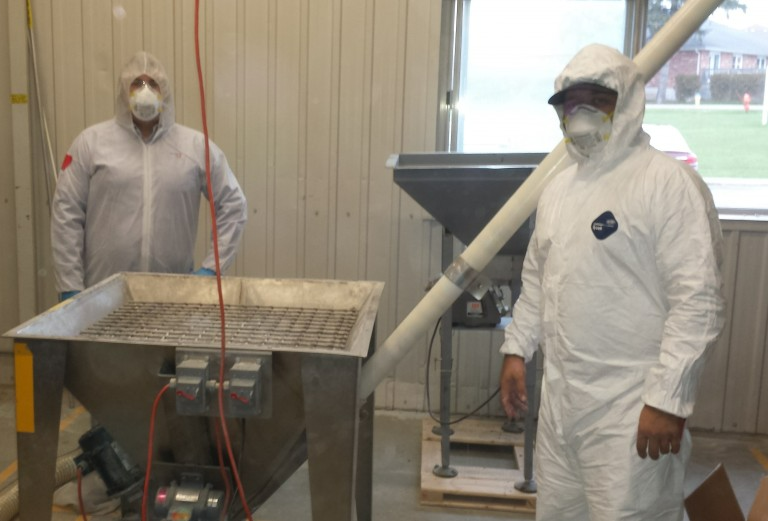
Flexible screw conveyors are well-adapted for batch and intermittent production. Flexible screws operate most efficiently at 45°, but can also run horizontally and at other angles. The equipment can be made portable so that it may be moved easily to service processes in different plant locations. The equipment is easy to clean and has a relatively small footprint. A major advantage of flexible screw conveyors are that they can be sealed for dust containment, eliminating the problems associated with product dusting during conveyance.
As its name suggest, flexible screw conveyors are exactly that: flexible. The equipment tube can be bent and curved within a recommended bend radius.
WHAT IS THE CAPACITY RANGE OF A FLEXIBLE SCREW CONVEYOR?
Equipment capacity is a function of a number of variables, including material bulk density and particle size, auger pitch and rotational speed, tube diameter and length, hopper size, and the angle at which the equipment will be operated. UniFlex conveyors from UniTrak are constructed from food-grade materials and are available in two sizes, with capacities dependent upon the exact material being conveyed.
CAN A FLEXIBLE SCREW CONVEYOR BE CUSTOMIZED FOR MY APPLICATION?
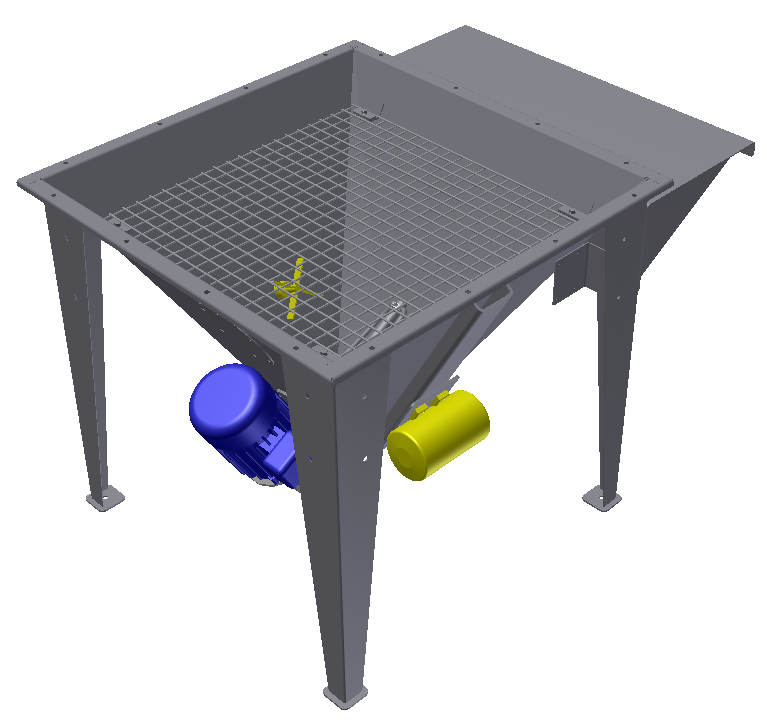
Using our “customerization” process, UniTrak can tailor a UniFlex conveyor to service most applications. Application-specific customization that we can perform on UniFlex conveyors includes the following:
Was this article helpful?
That’s Great!
Thank you for your feedback
Sorry! We couldn't be helpful
Thank you for your feedback
Feedback sent
We appreciate your effort and will try to fix the article